Santa Cruz County Dog Registration Information
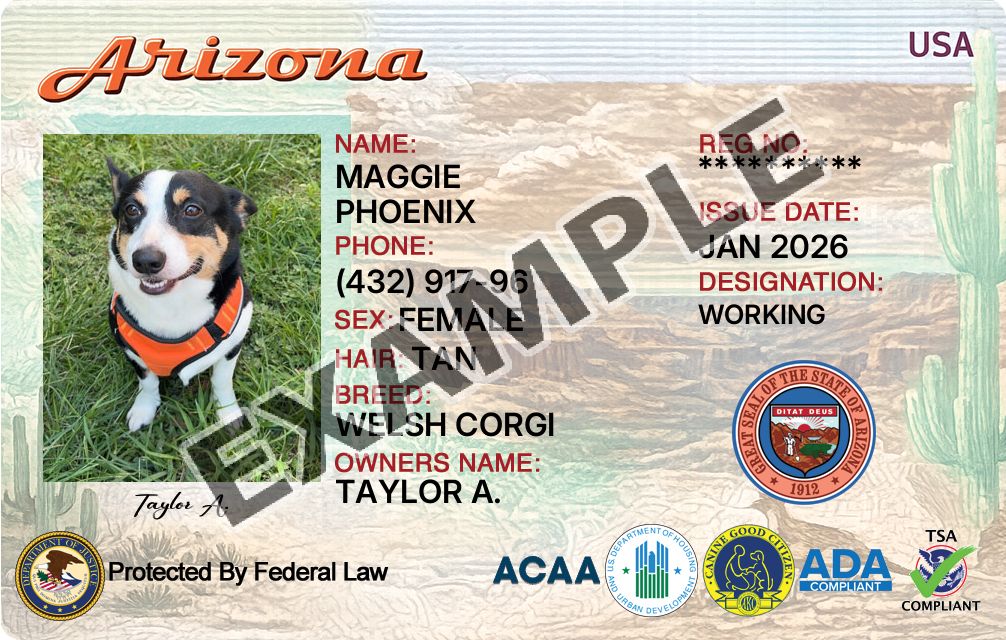
Service Dogs and Emotional Support Animals in Santa Cruz, Arizona
If you’re searching where do I register my dog in Santa Cruz County, Arizona for my service dog or emotional support dog, the key point is that most residents are looking for the official dog license (sometimes casually called “registration”). In Santa Cruz County, dog licensing is handled through the county’s animal services functions, and the most common requirement is proof of current rabies vaccination. Service dogs and emotional support animals (ESAs) are not “registered” through one universal federal registry, but they may still be subject to local dog license in Santa Cruz County, Arizona rules.
- Dog licensing (a local requirement that may apply to most dogs living in the county, including service dogs and ESAs)
- Legal status (service dog access rights under disability laws, and ESA housing-related rules)
Where to Register or License Your Dog in Santa Cruz County, Arizona
The offices below are the most relevant official points of contact for animal control dog license Santa Cruz County, Arizona questions and county licensing assistance. If you live inside an incorporated city or town, some rules may be enforced locally, but the county animal control office is the primary place to start when you’re unsure.
Santa Cruz County Animal Control Department
Santa Cruz County Animal Control Department (Mailing / County Complex Address for Mail-In Licensing)
Overview of Dog Licensing in Santa Cruz County, Arizona
What “registering your dog” usually means locally
In Santa Cruz County, “registering” a dog usually refers to getting a county dog license. Licensing is a local identification and compliance process tied to public health and animal control. If animal control picks up a dog, a current license tag can help connect the animal to the owner more quickly.
Who typically needs a dog license in Santa Cruz County, Arizona
County licensing guidance indicates that dogs kept in the county for a period of time during the year may need a license. In practical terms, if your dog lives with you in Santa Cruz County (full-time or long-term), you should assume licensing is required unless an official office tells you otherwise.
- Most pet dogs living in the county long-term
- Service dogs (service dogs are not “pets” under access laws, but local licensing can still apply as an animal identification requirement)
- Emotional support animals (ESAs generally follow standard dog licensing requirements)
City vs. unincorporated areas (why it can feel confusing)
Santa Cruz County includes incorporated communities (for example, the City of Nogales) and unincorporated areas. Local enforcement and additional municipal rules (like leash rules, nuisance regulations, or local fees) may vary. If you’re not sure whether you are in city limits or unincorporated county, the safest approach is to start with county animal control and confirm whether you have any additional city-specific steps.
What You Need Before Registering a Dog
Common documentation and information
Most licensing systems are built around verifying rabies vaccination status and identifying the owner and the dog. Prepare the following before you call or apply:
- Current rabies vaccination certificate (often required to be current and may need to be valid for a certain minimum time to qualify for a full-year license)
- Owner identification (driver license or other ID may be requested)
- Your current address in Santa Cruz County, Arizona
- Dog details (name, breed/description, sex, age, color/markings)
- Spay/neuter documentation (if you want an altered-dog rate and it’s offered)
Rabies vaccination is a frequent requirement
Many counties and cities require proof of rabies vaccination before issuing a dog license. If your dog’s rabies certificate is close to expiring, ask the licensing office whether you should renew the rabies vaccine first, then apply for or renew the license.
Steps to Register or License a Dog in Santa Cruz County, Arizona
Step-by-step process (typical)
- Confirm your jurisdiction (city limits vs. unincorporated county). If unsure, start with Santa Cruz County Animal Control.
- Gather your rabies certificate and any spay/neuter proof you plan to use.
- Contact the official office listed above to confirm the current licensing method (in-person, mail-in, or other accepted process) and what to include.
- Submit your application and fee using the method the office instructs.
- Keep the license/tag info available and follow local rules on where tags should be displayed (commonly on the dog’s collar).
If your dog is a service dog or an emotional support animal
In most places, service dogs and ESAs are handled like this:
- Dog licensing: You may still complete the standard dog license process because it’s about local animal identification and vaccination compliance.
- Service dog status: Determined by the dog’s training to perform tasks for a disability (and the handler’s disability-related need), not by a registry.
- ESA status: Determined by housing-related documentation needs and your situation; ESAs are not granted public-access rights like service dogs.
Service Dog Laws in Santa Cruz County, Arizona
Service dogs: what they are (and what they are not)
A service dog is a dog that is individually trained to do work or perform tasks for a person with a disability (for example, guiding a person with low vision, alerting to seizures, or interrupting self-harm behaviors). Service dog legal status is not created by buying an ID card, vest, certificate, or signing up in an online database.
How service dog status interacts with a county dog license
A dog license in Santa Cruz County, Arizona is typically about local compliance and identification (often tied to rabies vaccination). Even if your dog is a service dog, local licensing may still apply. If you believe your service dog qualifies for a fee reduction or a different tag type, ask Santa Cruz County Animal Control directly what documentation (if any) is accepted for licensing purposes.
Quick comparison: dog license vs. service dog vs. ESA
| Category | Dog License (Local) | Service Dog | Emotional Support Animal (ESA) |
|---|---|---|---|
| Purpose | Local identification and compliance (commonly tied to rabies vaccination and animal control) | Disability-related assistance through trained tasks | Emotional support that may be relevant in housing contexts |
| Issued by | County or city animal services/licensing office | No universal issuing authority; legal status is based on disability need + task training | No universal issuing authority; typically related to housing documentation needs |
| Typically required documents | Rabies vaccination certificate; owner info; sometimes spay/neuter proof | Not a “registration” process; training and disability-related need are the core factors | Not a “registration” process; often involves documentation for housing accommodations |
| Public access rights | No | Yes, in many public settings where the handler is allowed (subject to lawful limitations) | No (ESAs generally do not have the same public access rights as service dogs) |
| Do you still need local licensing? | Yes, if your local jurisdiction requires it | Often yes, because licensing is separate from access rights | Often yes, because ESA status is separate from licensing |
Emotional Support Animal Rules in Santa Cruz County, Arizona
What an ESA is (in plain terms)
An emotional support animal (ESA) is generally an animal that provides comfort to a person. ESAs are most commonly discussed in the context of housing accommodations. ESA status does not automatically grant the right to bring a dog into restaurants, stores, or other public places where pets are not allowed.
ESAs and local dog licensing requirements
For county purposes, an ESA is typically treated like any other dog when it comes to dog licensing requirements Santa Cruz County, Arizona. That usually means keeping rabies vaccination current and obtaining/renewing the local dog license if required by your jurisdiction.
If you’re trying to “register” an ESA
If your goal is a county record for identification and compliance, the correct step is usually the standard where to register a dog in Santa Cruz County, Arizona process through the official licensing office. If your goal is housing-related, you may need to discuss documentation requirements with your housing provider and verify what your local office requires for any separate dog license.
Frequently Asked Questions
Do I need a dog license in Santa Cruz County, Arizona?
Many residents do. County guidance indicates dogs kept within Santa Cruz County for a portion of the year may need a county dog license, and licensing commonly requires a current rabies vaccination certificate. If you live in a city or town, confirm whether there are additional municipal requirements.
Is there a federal registry for service dogs or emotional support animals?
No single federal government registry is used to “register” service dogs or ESAs nationwide. Local dog licensing is separate from service dog task training and separate from ESA housing-related considerations.
If my dog is a service dog, do I still need to license the dog locally?
Often, yes. A service dog’s access rights and legal status are different from a county dog license, which is typically tied to local animal control and rabies compliance. Contact Santa Cruz County Animal Control to confirm whether any fee reductions or special procedures exist.
What proof is typically required to get a dog license?
Requirements vary, but commonly include:
- Current rabies vaccination certificate
- Owner identification and contact information
- Spay/neuter proof (if a reduced fee is available)
What if I live in Nogales or another incorporated area inside Santa Cruz County?
You may have both county-level rules and city-level ordinances that apply. If you’re unsure which rules apply to your address, start with the county animal control department and ask whether you must also follow any city-specific licensing steps or animal-related rules.
Register A Dog In Other Arizona Counties
Select your county below to get started with your dog’s ID card. Requirements and license designs may vary by county, so choose your location to see the correct options and complete your pup’s registration.
- Apache County Dog Registration
- Cochise County Dog Registration
- Coconino County Dog Registration
- Gila County Dog Registration
- Graham County Dog Registration
- Greenlee County Dog Registration
- La Paz County Dog Registration
- Maricopa County Dog Registration
- Mohave County Dog Registration
- Navajo County Dog Registration
- Pima County Dog Registration
- Pinal County Dog Registration
- Yavapai County Dog Registration
- Yuma County Dog Registration